
Local property owners often contact our team at Hernandez Complete Tree Service with concerns about brown patches in lawns during the growing season.
We are the leading provider of lawn and tree services in Accokeek, Maryland, and we’d like to explain how discolored turfgrass rarely comes from a single issue. The spots indicate stress caused by weather, soil conditions, or biological activity. Let’s look at what to do when routine maintenance falls short and when professional support protects long-term turf health.
Why Brown Areas Signal Stress Rather Than a Single Problem
Many people assume grass turns brown because it lacks water. In reality, common causes of brown patches in lawns range from disease to soil structure problems.
Accokeek sits in Maryland’s humid transition zone, where warm nights and heavy dew keep grass blades wet for long periods. Moisture combined with clay-based soil creates ideal conditions for turf stress that shows up as uneven color and thinning.
How Fungal Issues Develop During Humid Summers
Fungal pathogens thrive when heat and moisture overlap. One of the most common causes of lawn disease and brown patch problems is the fungus that affects cool-season grasses such as tall fescue.
These patches often expand after muggy nights and appear irregular rather than perfectly round. Excess nitrogen, shaded areas, and poor airflow intensify fungal pressure. Without correcting these conditions, symptoms typically return even after temporary improvement.
When Heat and Drought Stress Grass Roots
Not every brown area points to disease. Excessive heat stresses shallow roots, especially in compacted soil. Slopes and sunny sections often fade first, then turn tan as stress increases. Footprints that remain visible after walking across the lawn usually indicate moisture stress.
How Chemical Injury and Pets Leave Their Mark
Fertilizer burn creates sharp-edged brown zones that match spreader patterns or overlap areas. These spots appear quickly after application and do not follow natural growth lines. Dog urine produces smaller dead centers surrounded by darker green rings. Both issues damage grass tissue directly and require solutions different from those for disease- or drought-related decline.
Why Insects and Soil Conditions Matter More Than Many Realize
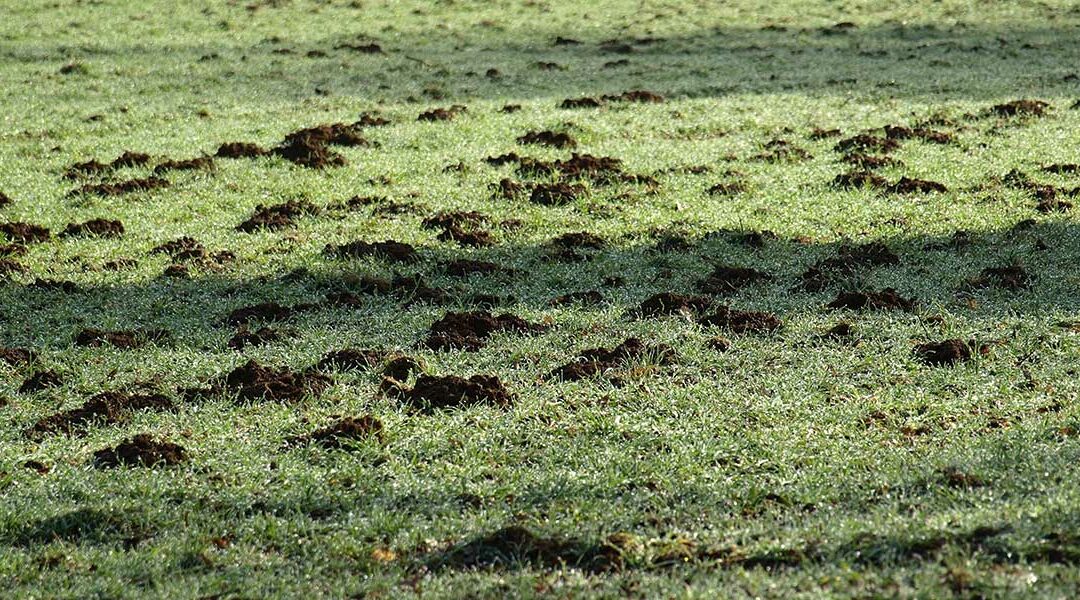
White grubs and other insects that feed on roots cause turf to loosen and peel back, further damaging turfgrass. This also increases wildlife activity, as various animals dig in the soil for food.
Compacted clay soil restricts oxygen and drainage, weakening roots and increasing vulnerability. These underlying soil conditions often cause persistent brown patches in lawns, more than environmental or surface conditions.
What Professionals Do When Diagnosing Brown Spots in Turf
Turfgrass experts perform a comprehensive inspection of damaged lawns, including:
- Assessing browning patterns
- Blade inspection
- Soil probing and testing
Lesions on individual blades suggest disease, while uniformly dry blades point toward heat stress. Loose turf raises concern for insect damage. Reviewing recent fertilizer use, watering schedules, and traffic patterns further clarifies the source.
What Long-Term Prevention Looks Like in Southern Maryland
Healthy turf depends on proactive fall care rather than summertime reaction. Core aeration, overseeding, balanced nutrition, and corrected watering habits reduce the risk of repeat outbreaks. Professional lawn care programs address underlying stress so grass enters summer with deeper roots and stronger resilience.
Consistent mowing height, sharp blades, and seasonal inspections help lawns recover faster after stress events across varied weather patterns each year.
Contact Hernandez Complete Tree Service To Restore Your Lawn’s Health
If brown patches in lawns continue to spread or return each year, professional help saves time and frustration. Hernandez Complete Tree Service provides expert evaluations and corrective treatments tailored to the Accokeek area, including soil improvement options such as liquid aeration for clay soil.
Call our expert team at (240) 299-4639 to schedule an assessment and protect your lawn’s appearance and long-term health.